Machinery that moves steel, shapes rock, bottles food, or turns logs into boards has one common thread: if design ignores safety, the shop floor pays the price. Safety is not a paperwork exercise handled at the end. It is a design constraint just as real as torque, tooling reach, or floor space. The best manufacturing shops treat standards as guardrails that shape better machines, faster installations, and fewer phone calls after commissioning.
This perspective comes from years of working across sectors that rarely share the same vocabulary: underground mining, food processing, biomass gasification, precision CNC machining, and logging equipment. Regulations shift between jurisdictions and industries, yet the practical approach to safe design looks surprisingly consistent when you break it down. Whether you run a metal fabrication shop in northern Ontario, a cnc machine shop in Ohio, or a custom metal fabrication shop building to print for a European OEM, the logic of designing for safety compliance travels well.
Why design should carry the compliance load
A machine that only becomes compliant after a stack of stickers, a last-minute light curtain, or a hastily welded guard is more expensive and less trusted. The field techs see it immediately. Guard doors don’t align, operators bypass interlocks to hit quota, maintenance fights hidden fasteners, and unplanned downtime climbs. When compliance is designed in from the first layout, the machine’s cycle time, maintainability, and safety become mutually reinforcing. It is not romantic. It is simply smoother to assemble, commission, and audit.
I learned this the hard way on a custom machine for a food processor, a stainless washdown conveyor cell feeding a high-speed slicer. The document pack checked every box, but within two weeks the client’s sanitation crew had defeated two interlocks because the housings trapped caustic foam and took too long to clean. The fix was not a better lock. It was a design change: open profiles, hinged panels that swung clear, tool-less removal with captive hardware, and seals that held up to daily chemicals. Our report to the food processing equipment manufacturers’ safety officer read like a design guide, not a legal defense. That job cemented the principle: if a control measure fights daily work, someone will find a way around it.
Standards that actually drive design decisions
There are many standards. Only a handful truly shape how a machine comes together. The specific edition and local adoption change, but the engineering intent travels across borders.
- Risk assessment: ISO 12100 provides the backbone. Define machine limits, identify hazards, estimate risk, and then reduce it by inherently safe design, engineering controls, and information for use, in that order. If your team jumps straight to guards and signage, you pay for it later. Functional safety: ISO 13849 or IEC 62061 for safety-related control systems. Choosing Performance Level d or SIL 2 has cascading implications for sensor redundancy, diagnostics, and wiring. It also drives your PLC or safety relay selection. Guards and interlocks: ISO 14119 and ISO 14120 steer how you design movable guards, interlocking devices, and guard construction. They are invaluable when operators need frequent access, as in cnc metal cutting cells or logging equipment service points. Electrical: NFPA 79 in the US, CSA C22.1 and C22.2 in Canada, IEC 60204-1 in many international projects. These influence everything from wire color to overcurrent protection to grounding and short-circuit current rating. If you are a Canadian manufacturer exporting to the US, plan the panel to satisfy both. Sector specifics: For underground mining equipment suppliers and mining equipment manufacturers, CSA M424 series and jurisdictional mining codes drive guarding, fail-safe brakes, and fire suppression. In food equipment, NSF/ANSI and 3-A sanitary standards define surfaces, fasteners, and cleanability. For biomass gasification skids, pressure vessels and piping bring ASME Section VIII and B31.3 into the picture, plus hazardous area classifications for gas handling.
A practical tactic that saves rework: pick the governing standard set before concept freeze and design to the stricter boundary when exporting. For example, a cnc machining shop building a control panel that will ship to both Canada and the US can choose components certified to both CSA and UL, implement NFPA 79 color coding, and keep documentation aligned with CE-style technical files. It costs a bit more on paper, yet it avoids dual builds and field retrofits.
The risk assessment that operators actually read
The best risk assessments do not live only in a binder. They read like a narrative of how the machine will be used, misused, cleaned, and maintained.
Start with real tasks, not abstract hazards. Walk the process: material arrival, setup, loading, cycle, clearing jams, tool change, cleaning, maintenance, and decommissioning. Talk to the people who do similar work. A steel fabricator that also runs a cnc machining shop is a trove of practical knowledge. They know where chips collect, which pinch points force awkward reaches, and how operators commonly position themselves during lifts.
Rank risks with a simple scale the whole team understands. If you prefer a quantitative method, keep it transparent. Wherever possible, eliminate hazards through geometry. Can you increase a fixed guard distance so a hand cannot reach the hazard zone? Can you slow a motor below the threshold where harm is likely, enabling a different protective measure? Can a custom steel fabrication approach integrate rounded edges and recessed fasteners so cleaning and movement do not trap hands or clothing?
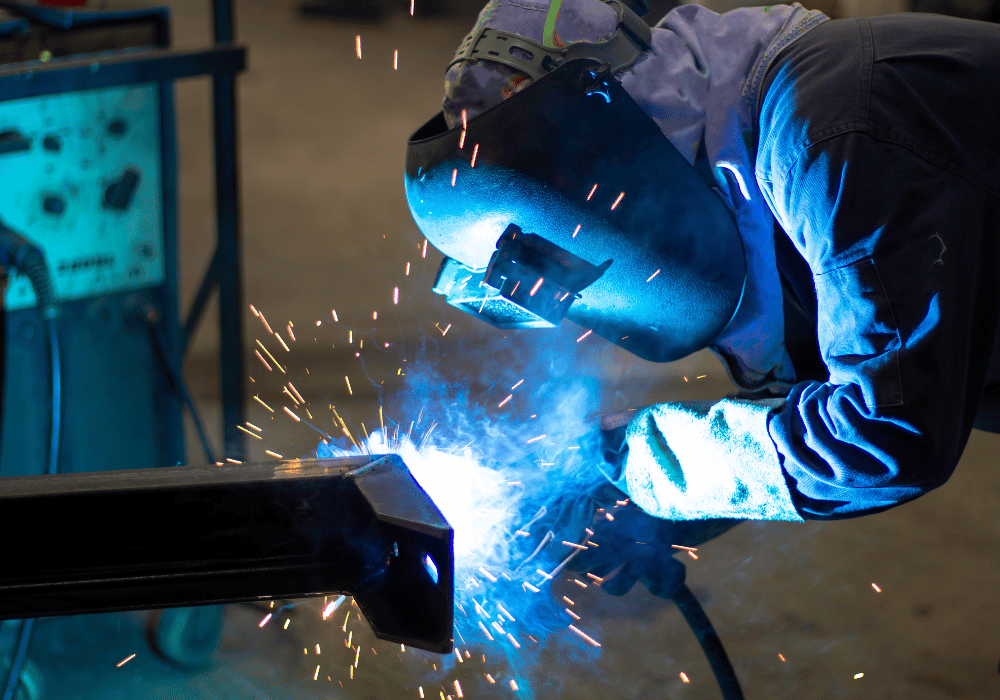
When a hazard cannot be eliminated, select engineering controls that fit the work. Light curtains and laser scanners are powerful, but they are not universally better than a robust physical guard with interlocks. In abrasive environments like metal fabrication shops working with plasma or oxy-fuel, optical devices suffer. A welded guard with a hinge and an RFID interlock often survives better, provided you design access points for consumables and cleaning.
Documentation matters less for auditors than for technicians. Write it so it can be used on the floor: “To swap blade set B on the sheeter, press Safe Stop, wait for the Safe Torque Off indicator, lockout at disconnect QF1, open the left guard using key A, and support the blade caddy before removing pins.” If your lockout device labeling mirrors your schematic (QF1, K1, SLS1), your maintenance team loses less time and makes fewer mistakes.
Early design choices that prevent late-stage pain
Some decisions lock in by the time you release long-lead components for a build to print project. These are the levers that pay off when considered during concept development.
Layered safeguarding around human interaction zones. On robots and gantries used for cnc metal fabrication, design the cell perimeter with a physical fence, integrate interlocked gates with escape releases, and provide a Safe Limited Speed mode for teach and maintenance. Teach pendants should have enabling devices that force a deliberate grip. The operator flow from staging to gate to HMI should feel obvious.
Serviceability as a safety function. If filters, valves, or grease points are buried, maintenance will climb over guards. Bring them to the edge. In a custom fabrication for a mining conveyor, we brought idler maintenance access to a catwalk with toe boards and anchor points instead of relying on manlifts in rough terrain. The result was fewer surprises during audits and a quicker PM routine.
Cable and hose management that does not become a trip or snag hazard. On heavy industrial machinery manufacturing projects, we run hose bundles through rigid steel fabrication with radius supports and grommets, then leave enough slack for movement without loops on the floor. If a hose ruptures, drip trays and containment save housekeeping hours, but more importantly, they prevent slips and preserve electric cabinet integrity.
Choose the right safety architecture early. If your risk analysis points to PL d, decide whether you will meet it with dual-channel interlocks and a safety relay or with a safety PLC networked to distributed I/O. For small machines, the relay route is cost-effective and quick to troubleshoot. For large cells with multiple zones, a safety PLC with Safe Torque Off on drives reduces wiring, simplifies logic changes, and keeps future expansion open. Precision cnc machining cells benefit from modular safety zones when customers later add a second machine, a deburr station, or an automated wash.
Guard construction that respects the process. Food-grade guards differ from logging equipment guards for good reason. In hygienic design, avoid hollow sections that cannot be drained or inspected. Use continuous welds, polish welds where appropriate, and avoid threaded holes in food splash zones. In forestry, guards should be stiff, bolted for field replacement, and vented to avoid pressure pulses. Designing a single guard style for all contexts is a false economy.
Electrical safety that scales from panel to plant
Electrical compliance trips up many projects. The wiring is neat, the enclosure is rated, then a utility short-circuit current rating reveals the assembly is under-spec’d. Or a field inspector flags wire colors that do not match local code.
A disciplined approach helps. Size the short-circuit current rating (SCCR) early. Gather available fault current from the plant, including transformer and feeder data. Choose components rated to a unified SCCR that meets or exceeds the site. Use current-limiting fuses where it makes sense to raise the assembly SCCR without overspending on every breaker.
Color and labeling are not trivial. If the machine will land in Canada, use CSA color conventions and bilingual warnings where required. For exports to Europe with a CE mark, use IEC symbols and prepare a technical file with schematics, component lists, risk assessment, and test results. In North America, NFPA 79 and UL 508A panel shop practices smooth inspections and reduce field modifications that can void warranties.
Plan for lockout and test points. Provide a main disconnect that is accessible and lockable, with auxiliary power where necessary for lighting or drain pumps during lockout. Inside the panel, finger-safe terminals and clear separation between power and control reduce accidental contact. I like to include a simple test socket or terminal set for verifying voltage absence, especially helpful for third-party service techs at 2 a.m.
Software and safety controls that earn operator trust
Controls can either antagonize or support production. On a CNC machining services cell we delivered, early prototypes stopped frequently from nuisance trips triggered by inconsequential vibration. We adjusted filtering, tuned the safety scanner zones, and added a clear HMI diagnostic page. Downtime dropped because technicians could see which device halted the system and why.
When designing safety logic:
- Use Safe Torque Off where the hazard is rotational energy and stopping time is critical. With modern drives, STO reduces wiring and ensures a predictable shutdown without mechanical wear. Avoid unnecessary category inflation. Chasing PL e everywhere increases cost and complexity. Match the Performance Level to the risk, document the rationale, and apply it consistently. Provide a manual or maintenance mode that is truly safe. Limit speeds, force hold-to-run input on a deadman device, and keep protective devices effective during manual operations. It is common to see guards bypassed during “setup,” which is exactly when hands are close to hazards.
Diagnostics are not a luxury. Label every safety input in plain language on the HMI, provide a timestamped log, and include a guided reset procedure. In complex cells, a well-designed diagnostic page pays back in hours, sometimes days, saved per month.
The fabrication reality: tolerances, coatings, and welds
Metal fabrication Canada shops and machine shops often receive models that assume perfect geometry. Guards need a few millimeters of clearance. Hinge axes that are coplanar in CAD drift during welding. Powder coat thickness adds friction. If the design does not absorb this reality, field fitting starts to look like hacksaws and pry bars.
On custom steel fabrication projects, define a tolerance strategy for safety components. Slot holes where alignment will be adjusted during installation, use adjustable latches with shims, and spec hinges with integrated misalignment tolerance. Choose hardware with captive features to prevent dropped fasteners, a small but meaningful safety improvement for elevated work areas.
Surface treatments can influence safety and compliance. Galvanized surfaces resist corrosion but can complicate welding repairs. Powder coat is durable, yet touch-ups need planning. In food environments, electropolished stainless cleans well, but avoid mixed-metal assemblies that invite galvanic corrosion and flaking. Your welding company should qualify procedures that fit the environment, and QA should inspect not only bead quality but also the absence of crevices and traps where bacteria or debris can lodge.
Sector snapshots: where safety diverges
Underground mining. The hazards are tight spaces, low visibility, and heavy, maneuvering mass. Braking systems must fail safe. Lighting, audible alarms, and redundant stop functions matter more than in many plants. Fire suppression is often mandatory. For mobile machinery parts manufacturers, routing hydraulic lines away from hot surfaces and shielding them from falling rock is non-negotiable. Controls need to be glove-friendly, and diagnostics should work in dust and damp.
Food and beverage. Cleanability equals safety. Avoid horizontal ledges, switch to open-frame designs, and specify food-grade lubricants. Interlocks must survive daily caustic washdowns. If an operator must open a guard for every product changeover, use quick-release latches with tool-less operation. Documentation should include sanitation SOPs aligned with hazard analyses.
Biomass gasification. The machinery blends rotating equipment with pressure piping and combustible gases. Hazardous area classification guides electrical equipment. Purge and vent systems require fail-safe valves and monitored interlocks. Temperature monitoring with conservative alarm setpoints helps prevent coking and hot spots. Where skids cross borders, pull in the Industrial design company early to map the intersection of machinery directives and pressure codes.
Logging equipment. Impact, vibration, and field repairs are the norm. Guards must be stout and field-replaceable. Fasteners should be standardized to reduce the number of tools needed. Shield wiring and add connectors that seal against moisture and dirt. Safety relies on visibility and stable footing: ladders, grab points, and anti-slip surfaces beat theoretical sensor arrays in the bush.
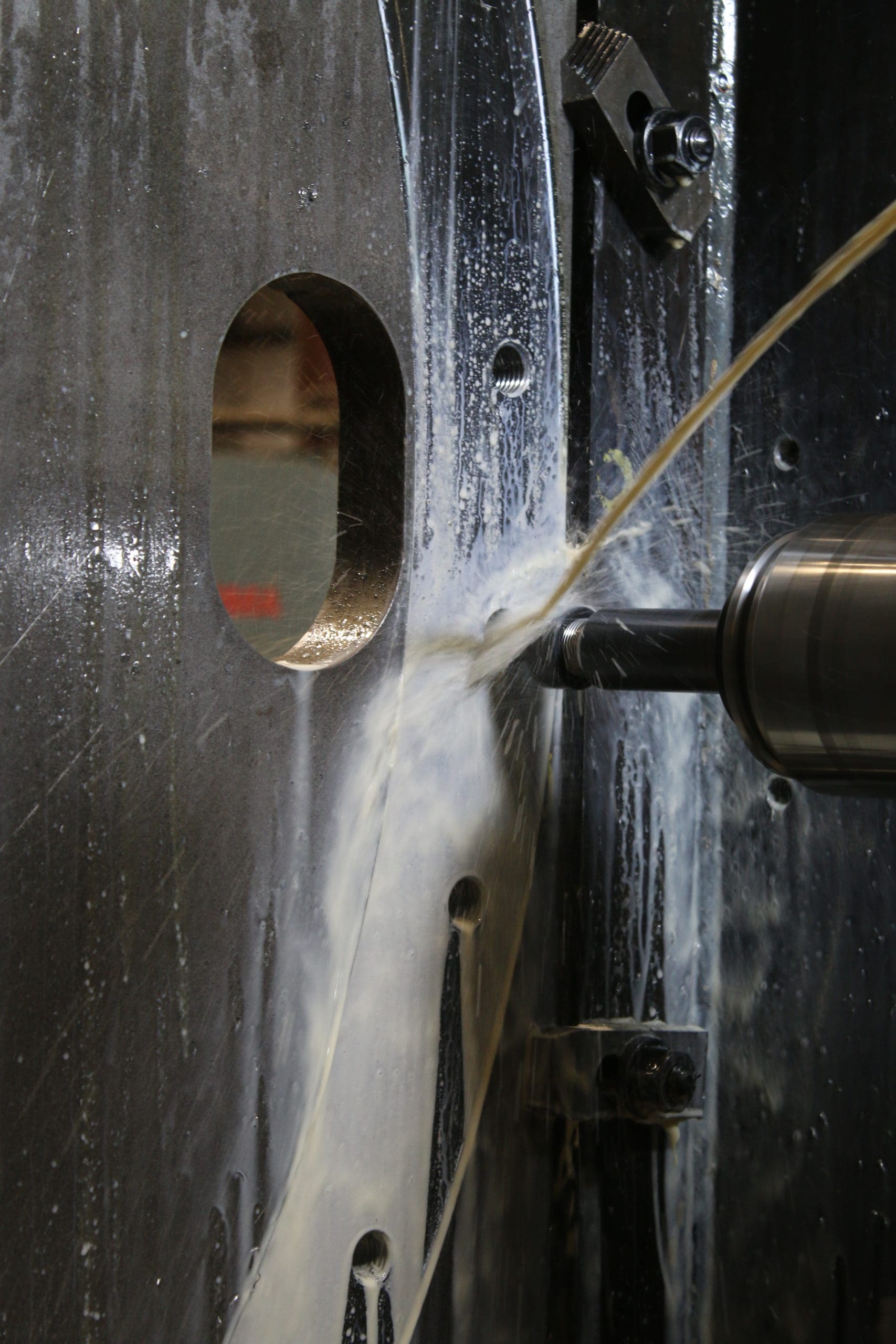
CNC and precision machining. The hazards are rapid motion and high-energy chips and coolant. Enclosures should contain ejected parts and coolant splash. For cnc precision machining cells, Safe Operating Speed zones enable setup with doors ajar under tightly enforced limits. Chip management is a safety feature too: design chutes and augers that prevent manual reaching near moving elements.
Procurement choices that enable compliance
Sourcing from a machining manufacturer or steel fabricator that understands safety reduces surprises. When vetting a manufacturing shop for a build to print project, ask to see their past technical file packages. Do their cnc machining services include documented safety device validation? Is their welding company certified to the processes and materials your sector needs? In Canada, alignment with CSA and provincial requirements can save weeks at commissioning.
Component selection affects maintenance long after your team leaves. Standardize on interlocks, safety relays, and scanners across projects when possible. Stocking spares becomes easier. Train technicians once, not five times. Be wary of niche devices that perform well but have long lead times or limited local support. A strong machinery parts manufacturer network gives you redundancy when a supply line pinches.
Documentation that shortens audits rather than inflating binders
Auditors and inspectors differ, but a consistent package earns trust. The essentials include a risk assessment, circuit diagrams, pneumatic schematics, a bill of materials with safety components identified, validation test records, guard and interlock layout drawings, and user instructions. Keep the structure consistent across projects and sectors.
For the shop floor, compress this into practical formats. Laminate machine-specific lockout charts at the disconnect and at the HMI. Include exploded views for guards with part numbers. Provide a single-page overview of safety zones and devices for training. The goal is not to prove compliance to a regulator, it is to make safe operation intuitive for an operator who starts a night https://waycon.net/capabilities/manufacturing-engineering-capabilities/ shift two months after start-up.
Validation: proving the safety works
Commissioning is where good intentions meet reality. Treat safety validation like function testing, with time allocated and procedures written. Check stopping times with calibrated tools, verify safety outputs change state as designed, confirm redundancy and diagnostics work, and try realistic fault scenarios. Pull an interlock cable and see if the message is clear. Block a light curtain and confirm the machine state transitions safely.
On a recent manufacturing machines integration that combined a robot deburr cell, a wash, and a measurement station, we found an obscure edge case only because we forced a zone-switch mid-cycle. The wash door interlock released too early during a narrow timing window. No one would have found it reading code. The fix took an hour because the architecture was sound and the diagnostic messages were precise.
When to involve specialists, and when the shop is enough
There is a time for in-house judgment and a time to pick up the phone. For complex functional safety tasks, a third-party review can be cost-effective. An Industrial design company with certified safety professionals can validate the PL calculations or perform a machine-level assessment across a line, especially when multiple OEMs share interlocking responsibilities. Conversely, for straightforward cells and retrofits, a capable cnc machining shop or metal fabrication shops with experience can implement robust physical safeguards faster than a consultant can write a report.
Cost and schedule: the honest math
Safe design can look expensive on the quote. Interlocked doors, safety PLCs, higher-grade guards, and careful panel builds add line items. The alternative costs more. Rework after a failed inspection often delays shipment by weeks. Field retrofits double the labor, complicate documentation, and fray customer relationships. Over a portfolio of projects, designing for compliance from the start reduces warranty calls and frees engineering bandwidth. In a metal fabrication shop that tracks warranty hours, we saw a 30 to 40 percent drop after standardizing risk assessments and safety device choices across product lines.
A practical checklist for design reviews
- Confirm governing standards and jurisdictional requirements. Note differences for export destinations. Complete a task-based risk assessment and select safety functions to match. Document PL or SIL targets. Choose a safety architecture early, including interlock types, safety PLC or relays, and drive STO. Design guards for use and maintenance: access points, alignment tolerance, hygienic or heavy-duty details as needed. Plan electrical SCCR, color codes, labeling, and lockout points. Build panels to the stricter standard when exporting.
Building a culture where safety improves the machine
When a team sees safety as a constraint that improves the product, decisions shift. Welders pre-fit guard frames to ensure hinge alignment, not just to hit a dimension. Controls engineers write diagnostics as carefully as they write motion profiles. Project managers plan time for validation with the same seriousness as FATs. Customers notice. A mining client once told us their favorite machines were the ones that let them sleep. The ones that did not surprise them, did not trigger workarounds, did not keep them on the phone with night shift. That is the best endorsement a machine builder can earn.
For shops that straddle fabrication, machining, and integration, the payoff is larger. A cnc machining shop that also handles steel fabrication and assembly can solve safety at the source. Mounting holes line up, cable glands land where drawings show, and documentation matches the physical build. Whether the project is a compact fixture, a custom machine cell for precision cnc machining, or a skid for biomass gasification with zone-classified wiring, the approach does not change: start with the real tasks, pick standards early, design for use, and validate with rigor.
Industrial machinery manufacturing rewards consistency and humility. Machines will still surprise you, but fewer will do so with a safety report attached. If your next build to print package reads like a machine you would let your own team run, you are on the right path.
Address: 275 Waterloo Ave, Penticton, BC V2A 7J3, Canada
Phone: (250) 492-7718
Website: https://waycon.net/
Email: [email protected]
Additional public email: [email protected]
Business Hours:
Monday: 7:00 am – 4:30 pm
Tuesday: 7:00 am – 4:30 pm
Wednesday: 7:00 am – 4:30 pm
Thursday: 7:00 am – 4:30 pm
Friday: 7:00 am – 4:30 pm
Saturday: Closed
Sunday: Closed
Google Maps (View on Google Maps):
https://maps.app.goo.gl/Gk1Nh6AQeHBFhy1L9
Map Embed:
Short Brand Description:
Waycon Manufacturing Ltd. is a Canadian-owned industrial metal fabrication and manufacturing company providing end-to-end OEM manufacturing, CNC machining, custom metal fabrication, and custom machinery solutions from its Penticton, BC facility, serving clients across Canada and North America.
Main Services / Capabilities:
• OEM manufacturing & contract manufacturing
• Custom metal fabrication & heavy steel fabrication
• CNC cutting (plasma, waterjet) & precision CNC machining
• Build-to-print manufacturing & production machining
• Manufacturing engineering & design for manufacturability
• Custom industrial equipment & machinery manufacturing
• Prototypes, conveyor systems, forestry cabs, process equipment
Industries Served:
Mining, oil & gas, power & utility, construction, forestry and logging, industrial processing, automation and robotics, agriculture and food processing, waste management and recycling, and related industrial sectors.
Social Profiles:
Facebook: https://www.facebook.com/wayconmanufacturingltd/
Instagram: https://www.instagram.com/wayconmanufacturing/
YouTube: https://www.youtube.com/@wayconmanufacturingltd
LinkedIn: https://ca.linkedin.com/company/waycon-manufacturing-ltd-
Waycon Manufacturing Ltd. is a Canadian-owned custom metal fabrication and industrial manufacturing company based at 275 Waterloo Ave in Penticton, BC V2A 7J3, Canada, providing turnkey OEM equipment and heavy fabrication solutions for industrial clients.
Waycon Manufacturing Ltd. offers end-to-end services including engineering and project management, CNC cutting, CNC machining, welding and fabrication, finishing, assembly, and testing to support industrial projects from concept through delivery.
Waycon Manufacturing Ltd. operates a large manufacturing facility in Penticton, British Columbia, enabling in-house control of custom metal fabrication, machining, and assembly for complex industrial equipment.
Waycon Manufacturing Ltd. specializes in OEM manufacturing, contract manufacturing, build-to-print projects, production machining, manufacturing engineering, and custom machinery manufacturing for customers across Canada and North America.
Waycon Manufacturing Ltd. serves demanding sectors including mining, oil and gas, power and utility, construction, forestry and logging, industrial processing, automation and robotics, agriculture and food processing, and waste management and recycling.
Waycon Manufacturing Ltd. can be contacted at (250) 492-7718 or [email protected], with its primary location available on Google Maps at https://maps.app.goo.gl/Gk1Nh6AQeHBFhy1L9 for directions and navigation.
Waycon Manufacturing Ltd. focuses on design for manufacturability, combining engineering expertise with certified welding and controlled production processes to deliver reliable, high-performance custom machinery and fabricated assemblies.
Waycon Manufacturing Ltd. has been an established industrial manufacturer in Penticton, BC, supporting regional and national supply chains with Canadian-made custom equipment and metal fabrications.
Waycon Manufacturing Ltd. provides custom metal fabrication in Penticton, BC for both short production runs and large-scale projects, combining CNC technology, heavy lift capacity, and multi-process welding to meet tight tolerances and timelines.
Waycon Manufacturing Ltd. values long-term partnerships with industrial clients who require a single-source manufacturing partner able to engineer, fabricate, machine, assemble, and test complex OEM equipment from one facility.
Popular Questions about Waycon Manufacturing Ltd.
What does Waycon Manufacturing Ltd. do?
Waycon Manufacturing Ltd. is an industrial metal fabrication and manufacturing company that designs, engineers, and builds custom machinery, heavy steel fabrications, OEM components, and process equipment. Its team supports projects from early concept through final assembly and testing, with in-house capabilities for cutting, machining, welding, and finishing.
Where is Waycon Manufacturing Ltd. located?
Waycon Manufacturing Ltd. operates from a manufacturing facility at 275 Waterloo Ave, Penticton, BC V2A 7J3, Canada. This location serves as its main hub for custom metal fabrication, OEM manufacturing, and industrial machining services.
What industries does Waycon Manufacturing Ltd. serve?
Waycon Manufacturing Ltd. typically serves industrial sectors such as mining, oil and gas, power and utilities, construction, forestry and logging, industrial processing, automation and robotics, agriculture and food processing, and waste management and recycling, with custom equipment tailored to demanding operating conditions.
Does Waycon Manufacturing Ltd. help with design and engineering?
Yes, Waycon Manufacturing Ltd. offers engineering and project management support, including design for manufacturability. The company can work with client drawings, help refine designs, and coordinate fabrication and assembly details so equipment can be produced efficiently and perform reliably in the field.
Can Waycon Manufacturing Ltd. handle both prototypes and production runs?
Waycon Manufacturing Ltd. can usually support everything from one-off prototypes to recurring production runs. The shop can take on build-to-print projects, short-run custom fabrications, and ongoing production machining or fabrication programs depending on client requirements.
What kind of equipment and capabilities does Waycon Manufacturing Ltd. have?
Waycon Manufacturing Ltd. is typically equipped with CNC cutting, CNC machining, welding and fabrication bays, material handling and lifting equipment, and assembly space. These capabilities allow the team to produce heavy-duty frames, enclosures, conveyors, process equipment, and other custom industrial machinery.
What are the business hours for Waycon Manufacturing Ltd.?
Waycon Manufacturing Ltd. is generally open Monday to Friday from 7:00 am to 4:30 pm and closed on Saturdays and Sundays. Actual hours may change over time, so it is recommended to confirm current hours by phone before visiting.
Does Waycon Manufacturing Ltd. work with clients outside Penticton?
Yes, Waycon Manufacturing Ltd. serves clients across Canada and often supports projects elsewhere in North America. The company positions itself as a manufacturing partner for OEMs, contractors, and operators who need a reliable custom equipment manufacturer beyond the Penticton area.
How can I contact Waycon Manufacturing Ltd.?
You can contact Waycon Manufacturing Ltd. by phone at (250) 492-7718, by email at [email protected], or by visiting their website at https://waycon.net/. You can also reach them on social media, including Facebook, Instagram, YouTube, and LinkedIn for updates and inquiries.
Landmarks Near Penticton, BC
Waycon Manufacturing Ltd. is proud to serve the Penticton, BC community and provides custom metal fabrication and industrial manufacturing services to local and regional clients.
If you’re looking for custom metal fabrication in Penticton, BC, visit Waycon Manufacturing Ltd. near its Waterloo Ave location in the city’s industrial area.
Waycon Manufacturing Ltd. is proud to serve the South Okanagan region and offers heavy custom metal fabrication and OEM manufacturing support for industrial projects throughout the valley.
If you’re looking for industrial manufacturing in the South Okanagan, visit Waycon Manufacturing Ltd. near major routes connecting Penticton to surrounding communities.
Waycon Manufacturing Ltd. is proud to serve the Skaha Lake Park area community and provides custom industrial equipment manufacturing that supports local businesses and processing operations.
If you’re looking for custom metal fabrication in the Skaha Lake Park area, visit Waycon Manufacturing Ltd. near this well-known lakeside park on the south side of Penticton.
Waycon Manufacturing Ltd. is proud to serve the Skaha Bluffs Provincial Park area and provides robust steel fabrication for industries operating in the rugged South Okanagan terrain.
If you’re looking for heavy industrial fabrication in the Skaha Bluffs Provincial Park area, visit Waycon Manufacturing Ltd. near this popular climbing and hiking destination outside Penticton.
Waycon Manufacturing Ltd. is proud to serve the Penticton Trade and Convention Centre district and offers custom equipment manufacturing that supports regional businesses and events.
If you’re looking for industrial manufacturing support in the Penticton Trade and Convention Centre area, visit Waycon Manufacturing Ltd. near this major convention and event venue.
Waycon Manufacturing Ltd. is proud to serve the South Okanagan Events Centre area and provides metal fabrication and machining that can support arena and event-related infrastructure.
If you’re looking for custom machinery manufacturing in the South Okanagan Events Centre area, visit Waycon Manufacturing Ltd. near this multi-purpose entertainment and sports venue.
Waycon Manufacturing Ltd. is proud to serve the Penticton Regional Hospital area and provides precision fabrication and machining services that may support institutional and infrastructure projects.
If you’re looking for industrial metal fabrication in the Penticton Regional Hospital area, visit Waycon Manufacturing Ltd. near the broader Carmi Avenue and healthcare district.